
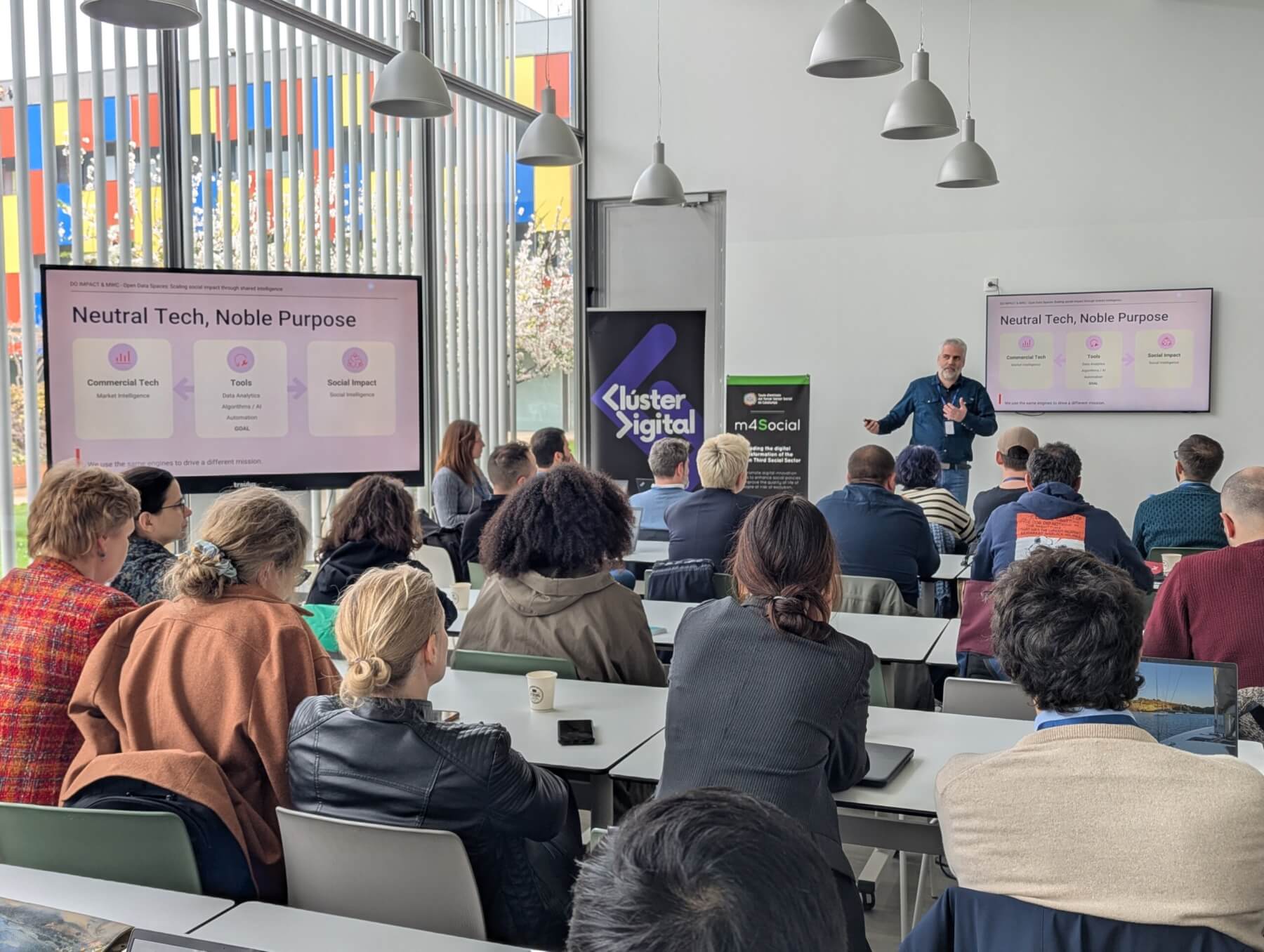
The fifth transnational event of the European project DO Impact was held in Barcelona and organized by Taula d’entitats del Tercer Sector and Cluster Digital de Catalunya, brought together more than 45 participants from across Europe alongside around 15 representatives from Catalan federations and social organisations. The meeting was held in three different settings: the DO Impact workshop venue; one space dedicated to Health and Society within the 4YFN MWC pavilion and the Mobile World Capital Foundation booth within the MWC bringing a diverse and multiperspective experience to all the attendees.

The event focused on how the social sector can advance digital transformation through better data organisation and the responsible use of artificial intelligence (AI). Over three days, participants explored practical initiatives, shared tools and discussed emerging challenges around data governance, interoperability and digital capacity within civil society organisations.
Beyond the technical discussions, the event was also an opportunity to reflect collectively on the strategic role of data in strengthening the impact of the social sector. Many of the ideas presented will be further explored and adapted in upcoming local DO Impact events across participating countries, allowing partners to translate these insights into territorial contexts and concrete actions.
Day 1 – Data governance and digital innovation for the social sector
Basetis – Open Data Spaces
Basetis introduced the concept of data spaces as secure and decentralised ecosystems that allow organisations to share information while maintaining ownership and control. The presentation emphasised that the social sector is often “data-rich but insight-poor”, collecting large amounts of information that remain underused. By structuring data and enabling interoperability through connectors, data spaces can transform fragmented information into shared intelligence that supports better decision-making, collaboration and social impact.
Taula del Tercer Sector – Data Base for the Third Sector
Taula presented the Third Sector Data Space, an initiative aimed at organising and centralising data produced by social organisations in Catalonia. The project seeks to address the fragmentation of existing information and unlock its potential by creating a shared environment where organisations can contribute and access structured data. Developed through co-creation with the sector, the initiative also includes training and support for organisations to improve their data management and aims to scale beyond the Catalan context in the future.
Utopiq – Artificial Intelligence for the European Social Economy Third Sector
Utopiq explored how AI is reshaping organisational practices and decision-making processes. The presentation highlighted different stages of AI adoption—from using ready-made tools to developing customised models—and stressed the importance of data quality, ethical use and governance. AI can increase productivity and support more inclusive communication, but organisations must remain aware of issues such as bias, hallucinations and data privacy. For smaller organisations, success depends on clear objectives, reliable internal data and strategic use of available tools.
Speed Dating – Digital initiatives across Europe
Several organisations briefly presented projects applying digital innovation to the social economy.
Digital Breach Observatory – Fundación Esplai (Spain)
This initiative collects and analyses data on digital exclusion across four dimensions: infrastructure, skills, socio-economic barriers and updated indicators. Through a Digital Gap Barometer, the Observatory identifies areas requiring urgent intervention and translates the findings into policy recommendations published through the RETIS journal.
Scaling Catalyst – Social Entrepreneurship Association of Latvia (SEAL)
Scaling Catalyst is a two-year project designed to strengthen the capacity of organisations supporting social entrepreneurs. One of its key outputs will be a self-assessment tool that helps support organisations evaluate their readiness to scale social impact and design more effective programmes for social enterprises.
Integrated Social Investment Support Platform – PESKO (Greece)
The ISISP platform connects investors and social organisations through an ESG-based digital infrastructure that enables real-time monitoring of both financial and social performance. By making social investment more transparent and measurable, the platform aims to strengthen trust and collaboration across the social economy ecosystem.
Digital Communities – The Wheel (Ireland)
The Digital Communities project addresses digital exclusion in rural areas along the Irish border by supporting individuals, community organisations and local businesses. Through training, organisational support and digital capacity building, the initiative seeks to enhance social services, economic resilience and digital inclusion.
The day concluded with a reflection on the importance of data sovereignty, decentralisation, interoperability and trust as the foundations of shared intelligence in the social sector. Participants also stressed the need for high-quality data, responsible human oversight and stronger partnerships to maximise the value of digital transformation.
Day 2 – Harnessing AI and open data
BertIA – Unlock the Power of Your Data with AI
BertIA presented the rapid evolution of AI tools such as Google Gemini, ChatGPT and Claude, highlighting their potential to support organisational productivity and knowledge management. The session emphasised the limitations of standard AI tools—such as lack of organisational context—and introduced solutions like Retrieval-Augmented Generation (RAG), which connects AI to internal knowledge bases. For organisations with fewer technical resources, structured prompt engineering was presented as a practical way to improve AI performance.
Barcelona Open Data Initiative
Barcelona Open Data Initiative showcased thier work in developing data tools through co-creation with end users, particularly to address digital gaps in the social sector. Projects such as Women Data Lab and DataLab Mayores combine open data from public administrations with social sector expertise to produce interactive tools that support policy analysis and social innovation. The methodology includes collaborative data events, tool development and capacity-building activities to strengthen organisations’ ability to use and interpret data.
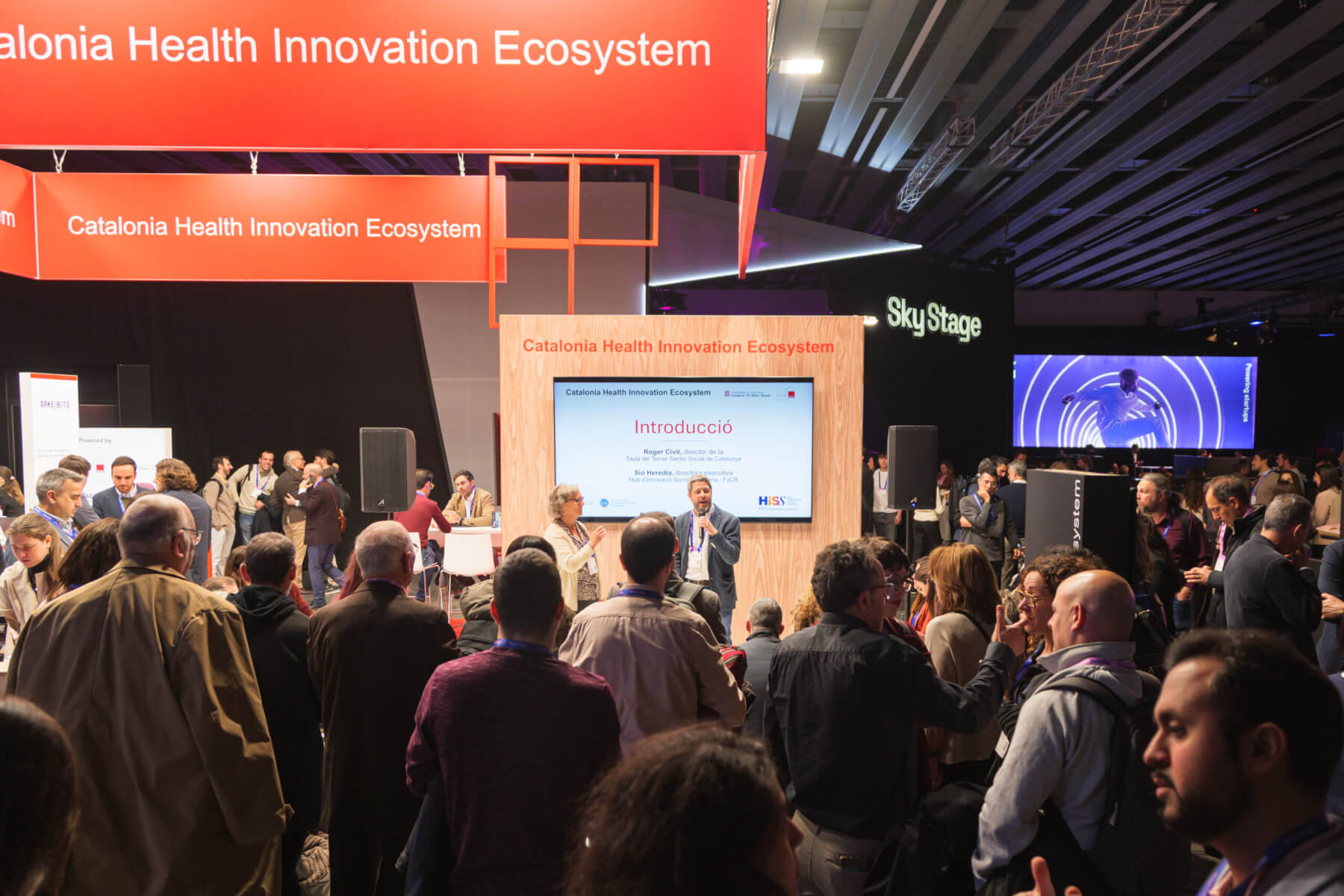
Mobile World Congress – Catalonia Health Innovation Ecosystem
Participants also attended a networking session at the Mobile World Congress focused on the Catalan health and social innovation ecosystem. Several initiatives illustrated how digital tools and data management systems are being applied in social services, including projects on impact evaluation, digital management platforms and technological transformation within social organisations.
Day 3 – Data governance and social impact
The final day featured the event “Governing Data, Caring for People: Challenges and Opportunities for the Social Third Sector”, organised by the Taula del Tercer Sector Social, Mobile World Capital Barcelona and the European Social Network at the Mobile World Congress.
A roundtable discussion explored how data sharing between the third sector and public administrations can improve services and care for people. Representatives from All Digital, the Government of Catalonia and the Barcelona City Council discussed the opportunities and challenges of building collaborative data governance models.
The session concluded with presentations of key initiatives—including SimbiòTIC, the Third Sector Data Space and DO Impact—demonstrating how digital transformation and data governance can strengthen the capacity of social organisations to generate knowledge, improve services and increase their social impact.
Overall, the DO Impact meeting in Barcelona highlighted a growing consensus: data and digital technologies can significantly enhance the effectiveness of the social sector, provided they are developed collaboratively, governed responsibly and aligned with the values of social impact and public good.
