
RURALINK
An inclusive network in rural areas
Partner Organisation
ANEL and Government of Navarra
Location
Navarra, Spain
Contact
Pablo Lansac – Head of Projects at ANEL
pablo@anel.es
About
Ruralink is an open collaborative network that promotes inclusive and sustainable rural development in Navarra (Spain). It was created by Aspace Navarra, Josenea and Gure Sustraiak—three Social Economy organisations working in rural areas—to provide a common space where organisations, public institutions, researchers and local actors can cooperate to address shared territorial challenges.
The network aims to strengthen rural communities by promoting social innovation, quality employment, inclusive entrepreneurship and cross-sector collaboration. Ruralink connects organisations that work in fields such as disability inclusion, social care, sustainable agriculture, entrepreneurship and territorial innovation, encouraging them to share knowledge, develop joint initiatives and generate new opportunities for rural areas.
Its relevance lies in its holistic and people-centred approach. Rather than addressing challenges in isolation, Ruralink promotes collaboration across sectors while integrating key issues such as housing, mobility, digitalisation, equality and sustainability. Through the PARI project, Ruralink is further strengthening its role as an emerging cluster for social and ecological innovation, contributing to more resilient and attractive rural territories.




Local challenge
Navarra’s rural areas face complex and interconnected social, demographic and environmental challenges. Population ageing, limited access to essential services, difficulties in attracting and retaining young people, labour shortages and the need to accelerate the ecological transition all affect the long-term sustainability of rural communities. These challenges are particularly significant for vulnerable groups, including older people, people with disabilities and those at risk of social exclusion.
Although many Social Economy organisations, local authorities and community initiatives are actively working across the territory, their efforts have traditionally been developed independently, limiting opportunities for collaboration, knowledge sharing and the creation of integrated solutions. Rural challenges such as employment, care, mobility, housing, digitalisation or circular economy cannot be effectively addressed through isolated interventions.
Ruralink emerged from this context as a collaborative response. Instead of creating new services from scratch, the network connects organisations with complementary expertise, enabling them to jointly identify local needs, co-design pilot initiatives and transfer successful solutions to other rural areas. This participatory and place-based approach strengthens the capacity of rural territories to respond to emerging challenges while making better use of existing local knowledge, resources and Social Economy actors.
Through PARI, this collaborative model is being further consolidated as an emerging Cluster for Social and Ecological Innovation, reinforcing cooperation as a key driver of rural resilience.
Partnership model & governance
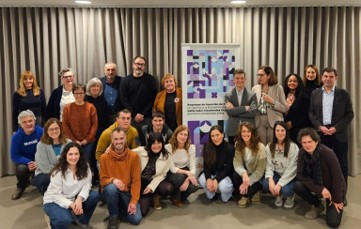
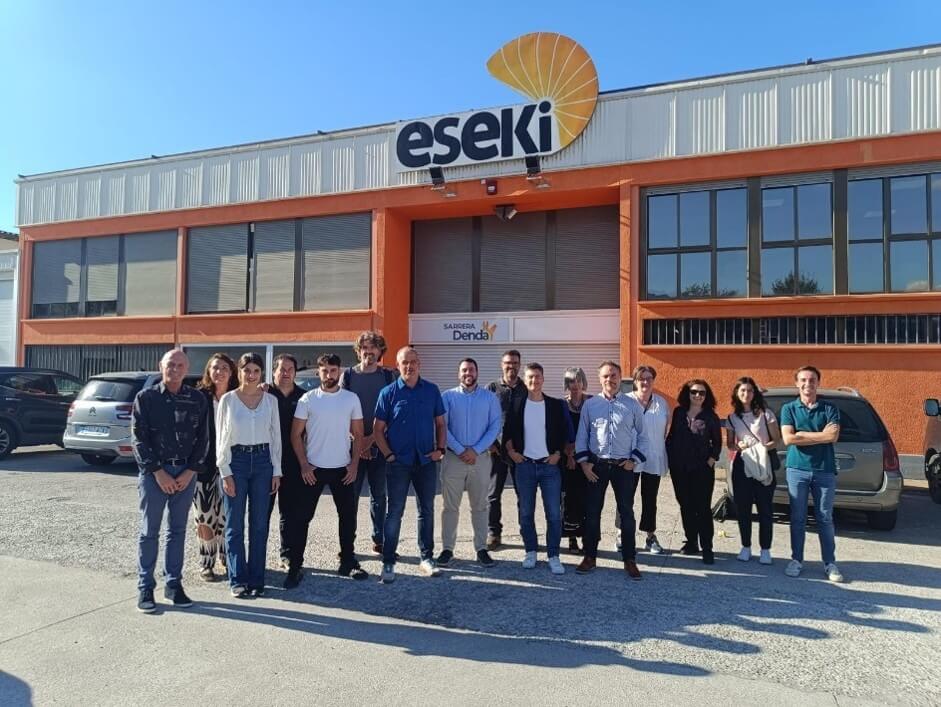
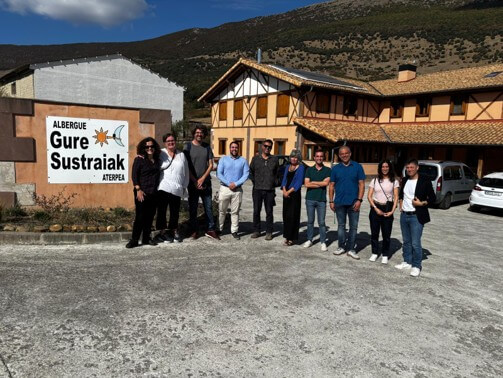
Ruralink is based on a collaborative and participatory governance model that brings together four founding Social Economy organisations: Aspace Navarra, Josenea Bio, Gure Sustraiak and Eutsi. Rather than creating a new legal entity, the partners have established an open cooperation network that builds on trust, complementary expertise and shared decision-making.
The network is coordinated through a joint steering group, where the founding organisations jointly identify territorial needs, prioritise actions and coordinate the development of new initiatives. Decisions are taken collectively, ensuring that each organisation contributes according to its experience and knowledge of the territory.
A distinctive feature of Ruralink is its innovation hub model. Each founding organisation leads a thematic area linked to its own expertise—such as care and inclusion, circular economy, entrepreneurship or active ageing—while collaborating across themes whenever challenges require integrated solutions. This structure combines local knowledge with cross-sector cooperation and facilitates the co-design of pilot projects that can later be replicated in other rural areas.
Ruralink is conceived as an evolving ecosystem rather than a closed partnership. Municipalities, public authorities, businesses, research organisations and other civil society actors are progressively involved according to the needs of each initiative, strengthening the network’s capacity to generate place-based, collaborative and scalable solutions for rural territories.
Main activities of the cluster
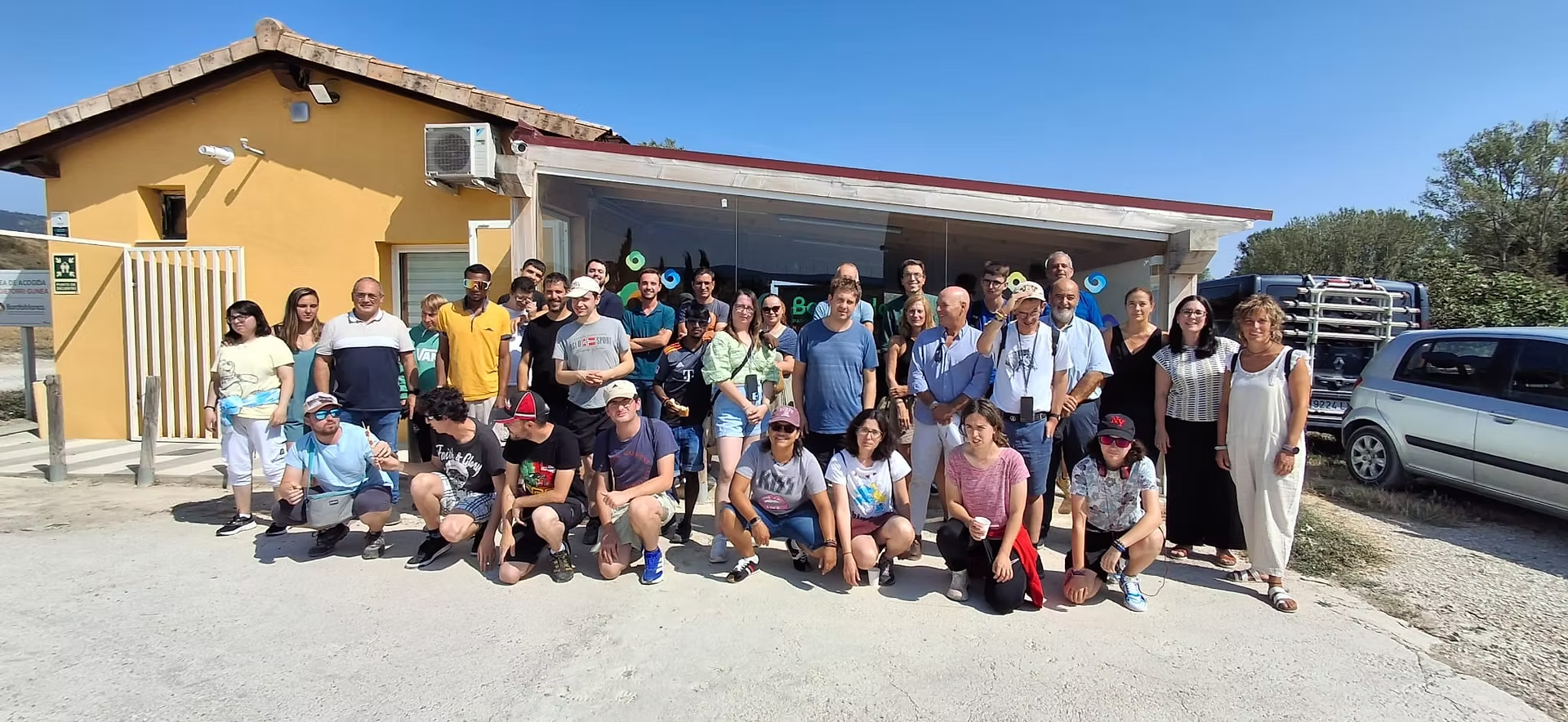
Ruralink develops collaborative actions that strengthen the capacity of rural communities through social innovation and cross-sector cooperation. Rather than delivering services directly, the network acts as a platform to identify common needs, design joint responses and coordinate the implementation of innovative initiatives across the territory.
Its main activities include mapping local challenges, facilitating participatory processes with municipalities and local stakeholders, and co-designing pilot projects that address priority issues such as inclusive employment, care services, circular economy, digitalisation and sustainable rural development. Pilot initiatives are tested collaboratively and, once validated, are adapted and transferred to other rural areas where similar needs exist.
The network also develops shared methodologies and tools that improve cooperation between its members and external partners. Examples include collaborative innovation hubs, the Hizketan digital accessibility tool, the Ruralink Basket initiative promoting local circular economy, and joint projects focused on inclusive care and healthy ageing. Ruralink further supports knowledge exchange, capacity building and the creation of new partnerships involving public authorities, businesses, research organisations and civil society.
A key feature of the network is its commitment to scalability and replication. By sharing expertise, resources and proven methodologies, Ruralink enables innovative solutions developed in one territory to generate wider social impact across rural Navarra and beyond.
Results and Impact
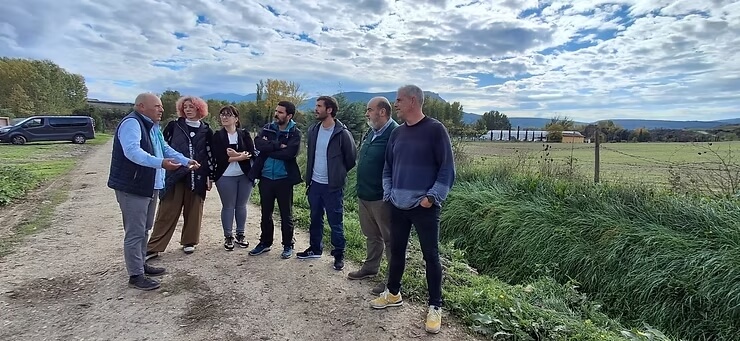
Since its creation in 2023, Ruralink has established a collaborative ecosystem that enables Social Economy organisations to address rural challenges through joint action rather than isolated initiatives. One of its main achievements has been the creation of a stable governance framework that facilitates trust, knowledge sharing and coordinated responses among organisations with complementary expertise.
The network has successfully launched several collaborative pilot initiatives. These include an inclusive care project on textured food services for older people in the Salazar Valley, developed jointly by Aspace Navarra and Eutsi, and the Ruralink Basket initiative, which combines agroecological production, local marketing and social inclusion through collaboration between Josenea Bio and Gure Sustraiak. Ruralink has also developed the Hizketan digital tool to improve the accessibility of educational and awareness-raising visits delivered by the network’s members.
Beyond these concrete initiatives, Ruralink has strengthened collaboration with municipalities, public administrations and other territorial stakeholders, increasing the visibility of the Social Economy as a key actor in rural development. The network has demonstrated that collaborative innovation can generate more integrated, transferable and place-based solutions, laying the foundations for the replication of successful experiences in other rural areas of Navarra and contributing to the development of a resilient rural innovation ecosystem.

Funded by the European Union. The views, information, documentation, figures and opinions expressed in this document are however those of the author(s) only and do not necessarily reflect those of the European Union or EISMEA. Neither the European Union nor the granting authority can be held responsible for them.
PARI – Project ID: 1011698037